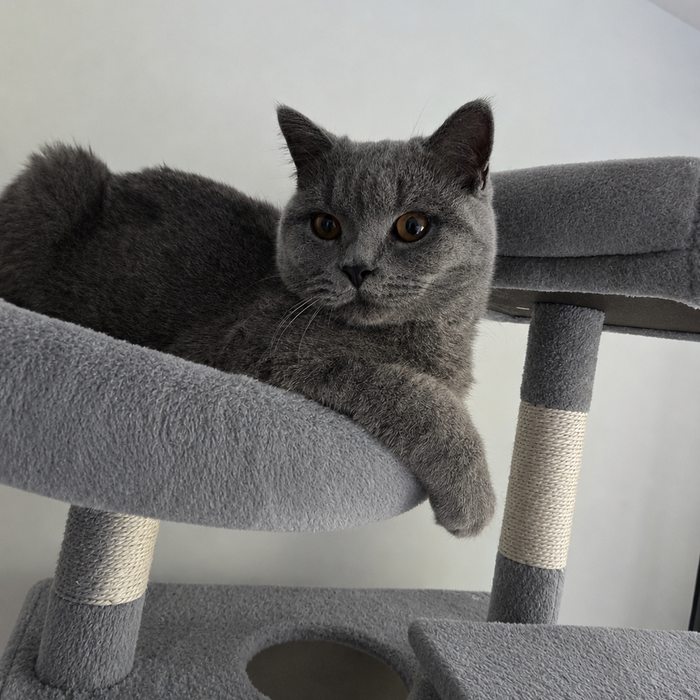
Scratching helps cats maintain their claws, stretch and communicate through marks and scent. A Maine Coon scratching the sofa does not, by itself, prove boredom or deliberate misbehaviour.
Notice the preferred surface
Look at where and how your cat scratches: upright or horizontal, beside a resting place or along a regular route. Compare those preferences with the alternatives already available. A post that wobbles, is difficult to reach or has an unfamiliar texture may be less appealing.
Cats Protection’s scratching guide explains this normal behaviour and the importance of appropriate outlets.
Offer an accessible alternative
Try a stable scratching surface near the area your cat already uses. For an upright post, check that it allows a comfortable stretch and follows the manufacturer’s installation instructions. Some cats prefer a horizontal or angled surface, so a taller post is not always the answer.
Reward voluntary use. Do not punish scratching or move the cat’s paws against the new surface. Cats Protection specifically advises against forcing paws onto a post in its behaviour guidance.
Choose by dimensions and use
When comparing Scratch Central with other options, check the actual scratching area, orientation and stability. Do not assume a product is suitable for every Maine Coon or guarantees that furniture scratching will stop.
Consider the wider situation
Provide play, rest and accessible resources suited to your cat. If scratching changes suddenly, becomes intense or occurs alongside hiding, vocalising or other changes, contact your vet rather than first running a prolonged boredom experiment.
A vet can assess health concerns and, where appropriate, refer you to a qualified feline behaviour professional.
Frequently asked question
Does scratching furniture prove that a cat is bored?
No. Scratching is normal behaviour, and surface preference, location, stress or other factors can influence where it happens.