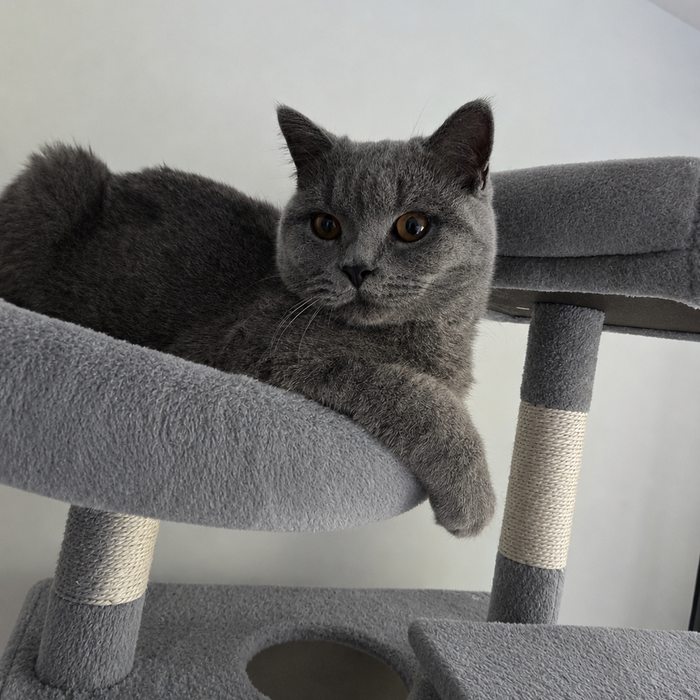
A door frame is a prominent place in a cat's route through the home. Scratching there may involve communication as well as claw maintenance. Before repairing the marks, look at why that particular entrance keeps being used.

Record when the scratching happens
Notice whether it follows waking, a closed door, another cat passing or activity outside. Cats Protection notes that entry and exit points can be significant scratching locations. Do not assume all door-frame scratching has one cause.
Offer an appropriate surface nearby
Place a suitable scratching resource near the chosen area where it can be used without obstructing the doorway. Check the cat's preferred direction of stretch and the post's actual usable height. A post hidden in another room may not serve the same location preference.
Keep the response calm
Avoid punishment and do not drag the cat's paws along the new post. Protect and repair the frame only with materials and arrangements appropriate for the home and cat, keeping loose edges or chewable strips out of reach. A deterrent alone does not provide a scratching outlet.
Review tension around the doorway
If another cat blocks the route or the scratching accompanies distress, address the wider context. Ask your vet about behavioural support for a persistent or sudden change. Keep access to essential resources available while you investigate.
Check Scratch Central's 60 cm overall height and 35 × 35 cm base against the proposed position. Those dimensions are a starting point for fit, not a promise that every cat will choose it.