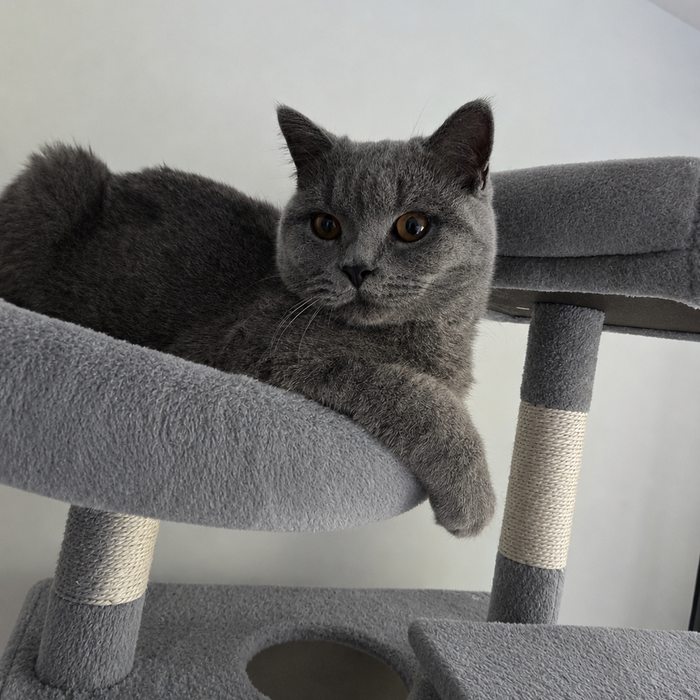
Play and environmental variety matter, but scratching furniture, vocalising or running at night cannot diagnose under-stimulation. Look at the individual cat, the home and any recent changes before choosing a response.
Start with a brief record
Note the location and timing of scratching, the surfaces involved, and changes in household routine or other pets’ behaviour. Record new signs such as hiding, appetite changes or discomfort. Improvement after play does not, on its own, establish the cause.
Cats Protection’s behaviour guidance explains why understanding the cause matters. Seek veterinary advice promptly for a sudden or concerning change rather than waiting until enrichment has failed.
Check access to everyday resources
Ensure your cat can reach food, water, litter, rest and scratching areas without another pet blocking the route. Provide places to withdraw as well as opportunities to observe. A single tall tower does not replace these needs.
Offer variety at a comfortable pace
Try suitable scratching textures and orientations, placing alternatives near preferred scratching spots. Offer interactive play that follows your cat’s interest, with breaks. Inspect toys and store strings or wand toys safely after use.
Cats Protection’s play guidance discusses appropriate outlets. Adjust activities for age, health and mobility instead of setting a breed-based exercise quota.
Choose furniture for actual fit
Compare usable platforms, entry dimensions and step spacing, and follow each model’s load and installation instructions. More height or more products will not automatically resolve a behaviour problem.
Our scratching and placement guide offers practical checks. Browse cat towers only after identifying the feature your cat needs.
Review what changes
Make manageable changes and observe their effect. Avoid punishment or forcing interaction. If problems persist, ask your vet about referral to a qualified feline behaviour professional.