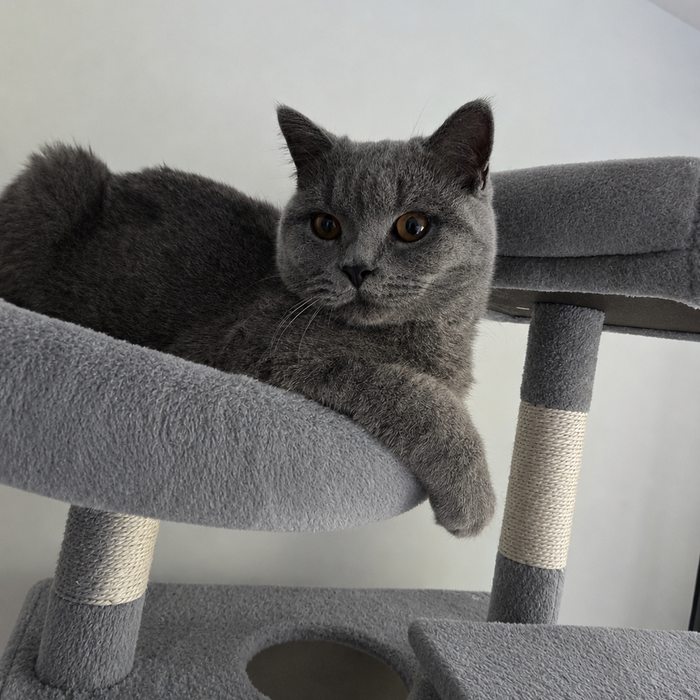
If an older cat stops using a favourite perch, consider both its health and the route to that spot. Stiffness, muscle loss or reduced jumping should not simply be labelled normal ageing. Your vet can assess possible pain or illness.
Watch the route
Observe where your cat hesitates without encouraging repeated attempts. Check the height change, landing area, grip and route down. A softer cushion does not solve an entrance or jump the cat cannot manage.
Make practical adjustments
Depending on your cat’s needs, a stable step, suitable ramp or lower resting option may help. Keep changes manageable and avoid rearranging every familiar resource at once. Cats Protection’s older-cat guide discusses accessible resting places and essential resources.
If stairs are difficult, provide essentials on an accessible level. Food, water and litter should remain appropriately separated rather than crowded together. In a multi-cat home, check that another cat cannot block access.
Compare the whole product
For a bed, measure entry height and usable resting area. For furniture, check clear platform dimensions, step spacing, installation instructions and load limits. A lower product is not automatically easier to use if its doorway or rim remains difficult.
Browse beds and comfort using those checks, and consult the size guide. Ask about missing dimensions before buying.
Review comfort with your vet
Home changes can support access, but cannot establish whether arthritis is present or replace pain management. See our arthritis and furniture guide for questions to discuss.
Let your cat choose a comfortable alternative if an elevated spot is no longer suitable. The aim is reliable access to daily needs and preferred activities, not preserving height at any cost.